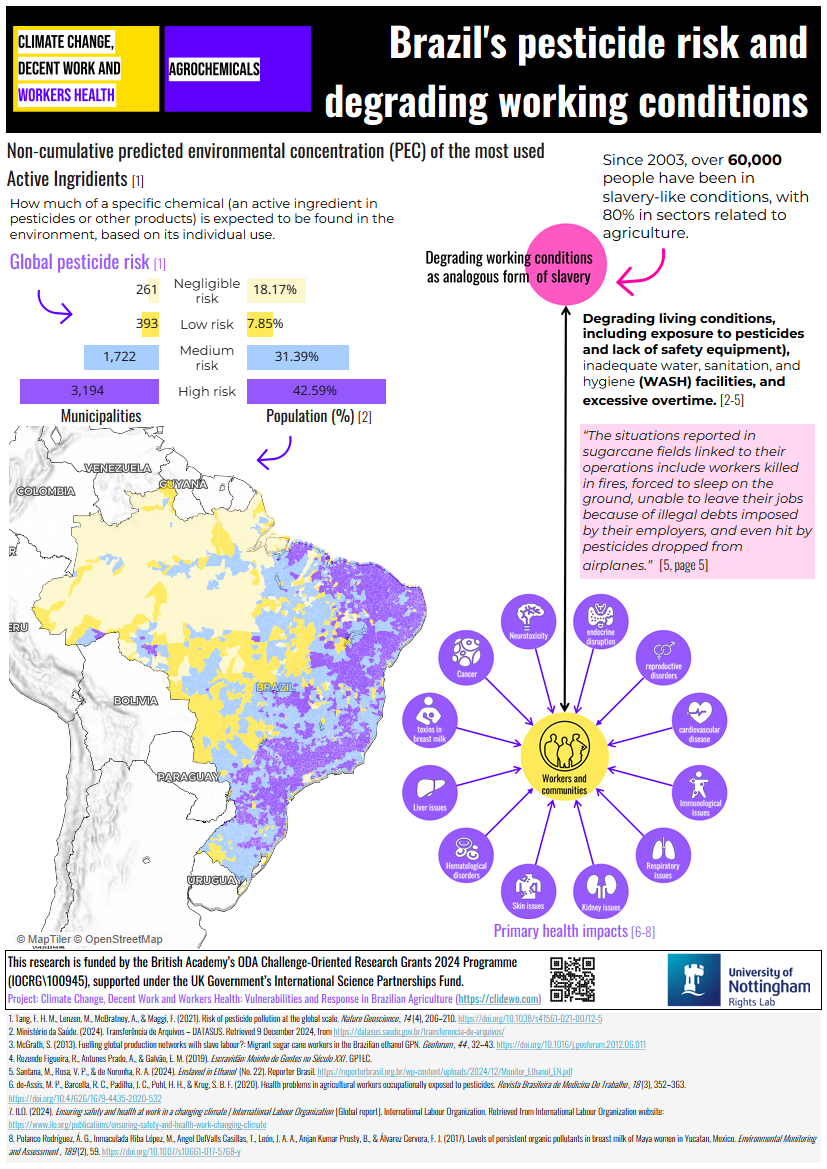
Brazil’s pesticide risk and degrating working conditions
datavis
Agrochemicals
Workers Health

Indexes turn lots of complex data into one clear picture. They help people quickly understand how countries or communities are doing and compare progress over time or between places.
Different indexes, different purposes
- HDI looks at overall human development (health, education, income).
- Social Protection Index focuses on how well people are protected against risks like poverty, illness, or unemployment.
- Climate Vulnerability Index shows how exposed and prepared a place is for climate risks.
Each is designed for a specific question, but they often share indicators, use rankings, and simplify data to explain the bigger picture in an easy-to-read way.
Benefits
- Easy to understand and communicate
- Allow comparisons and tracking progress
- Support decision-making and policy priorities
Trade-offs
- Can oversimplify complex realities
- Results depend on data quality and what’s included
- Uncertainty and local differences may be hidden
Bottom line: Indexes are powerful summaries—but they work best when used alongside deeper analysis, not alone.
We will soon enable an interactive version and unpack these critical connections among Climate Change, Decent Work, and Workers’ Health.
Download
- [Interactive version] (coming soon)
- Download high resolution datavis
- [Download Tableau worksheet] (coming soon)
- [Look inside the code to collect data] (coming soon)